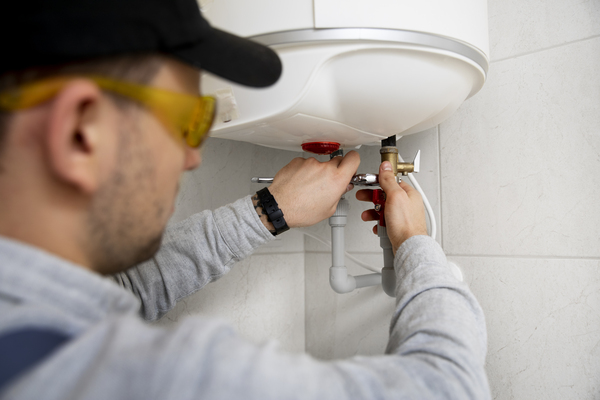
Most traditional tank water heaters last 8 to 12 years, while tankless water heaters can last 20 years or more with proper maintenance. In San Tan Valley, our hard water often pushes tank units toward the shorter end of that range, because mineral sediment builds up and wears the tank out faster. Knowing your heater's age – and the warning signs it's failing – helps you replace it on your terms instead of after a cold shower or a flooded garage.
Average Water Heater Lifespan
- Tank (gas or electric): 8–12 years
- Tankless: 20+ years
- Hybrid / heat-pump: 10–15 years
Your unit's manufacture date is usually encoded in the serial number on the label. If yours is past the 8-year mark, it's smart to start watching for the signs below.
7 Signs Your Water Heater Is Failing
1. It's Over 8–12 Years Old
Age alone is the biggest predictor. An older unit that's acting up is usually better replaced than repeatedly repaired.
2. Rusty or Discolored Hot Water
Brown, red, or cloudy hot water often means the tank is corroding from the inside – a problem that only ends one way.
3. Popping, Rumbling, or Banging Noises
These sounds come from hardened sediment at the bottom of the tank, which forces the unit to work harder and shortens its life.
4. Not Enough Hot Water (or It Runs Out Fast)
As sediment fills the tank, there's less room for hot water. If showers are getting shorter, the tank may be near the end.
5. Water Pooling Around the Base
A leak from the tank body cannot be repaired – it means replacement, and soon, before it fails completely and floods the area.
6. Water That Won't Get Hot
A failing heating element, burner, or thermostat can sometimes be repaired, but on an older unit it often signals the end.
7. Frequent Repairs
When you're calling for repairs more than once a year, those costs add up fast – replacement is usually the better value.
How to Make Your Water Heater Last Longer
You can add years to your unit with a little care, which matters even more in our hard-water area:
- Flush the tank once a year to remove sediment before it builds up.
- Install a water softener to slow the mineral scaling that shortens tank life here.
- Check the anode rod every few years – this sacrificial rod protects the tank from rust and is cheap to replace.
- Set a sensible temperature (around 120°F) to reduce strain and scaling.
What Shortens a Water Heater's Life in San Tan Valley?
Local conditions matter. Our hard water is the number-one factor – the high mineral content accelerates sediment buildup and corrosion inside the tank, which is why many San Tan Valley heaters wear out closer to 8 years than 12. High water pressure adds stress to the tank and connections, and skipping annual maintenance lets sediment accumulate unchecked. A neglected anode rod (the sacrificial part that draws corrosion away from the tank) is another common reason a heater fails early. The good news: each of these is manageable with basic upkeep and, where needed, a water softener.
Water Heater Lifespan FAQ
Can a water heater last longer than 12 years?
Yes – with annual flushing, a healthy anode rod, and especially a water softener to fight our hard water, a well-maintained tank can exceed its average lifespan. Tankless units routinely last 20+ years with care.
Is an old water heater dangerous?
An aging unit is more likely to leak or fail, and a leaking tank can cause significant water damage. While not usually an immediate safety hazard, a heater past its expected life should be watched closely and replaced before it fails completely.
How can I tell how old my water heater is?
Check the serial number on the manufacturer's label – it typically encodes the month and year of manufacture. If you can't decode it, we can identify the age during an inspection.
Should You Repair or Replace?
As a rule: repair a newer unit with a minor, isolated problem; replace one that's older, leaking from the tank, or needing repeated fixes. If you're weighing the numbers, our guide on water heater replacement cost breaks down what to expect.
Plan Your Replacement Before It Fails
The smartest time to replace a water heater is on your schedule – not after it dies. A planned replacement lets you compare tank and tankless options, choose an energy-efficient model, and book the work during normal hours. Waiting until the tank ruptures usually means a cold house, emergency rates, and cleaning up water damage. If your unit is showing several of the signs above – especially age plus rust or noise – it's worth getting ahead of it now. A quick inspection tells you whether you have months or years left, so you can budget with confidence instead of being caught off guard.
Get an Honest Assessment in San Tan Valley
Not sure whether your water heater has years left or is on borrowed time? Az Express Plumbing will inspect it and give you a straight answer – no pressure to replace a unit that still has life in it. Learn more on our water heater repair & installation page, or call (480) 771-7519 today.