
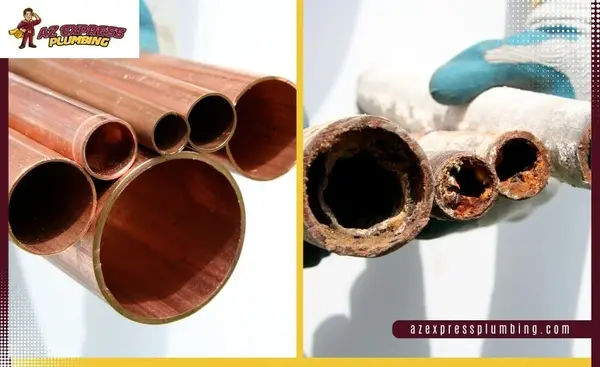
If you live in San Tan Valley, there's a good chance you'd benefit from a water softener – our area has some of the hardest water in the country. Hard water is packed with dissolved calcium and magnesium that scale up pipes, shorten the life of your water heater and appliances, leave spots on dishes, and make soap less effective. A water softener removes those minerals, protecting your plumbing and improving day-to-day water quality. Here's how to know if you need one.
How Hard Is the Water in San Tan Valley?
Arizona consistently ranks among the states with the hardest water, and San Tan Valley is no exception. Water hardness is measured in grains per gallon (GPG); anything above about 7 GPG is considered hard, and much of our area runs well beyond that. That constant mineral load is why local homeowners see scale buildup, crusty faucets, and water heaters that wear out faster than the manufacturer's estimate.
7 Signs You Have Hard Water
- White, crusty buildup on faucets, shower heads, and around drains.
- Spots and film on glasses, dishes, and shower doors.
- Soap and shampoo that won't lather well, plus filmy skin and dull hair.
- Stiff, scratchy laundry and faded colors over time.
- Low water pressure from scale narrowing pipes and clogging aerators.
- A water heater that pops or rumbles from sediment buildup.
- Appliances failing early – dishwashers, washing machines, and coffee makers.
What a Water Softener Actually Does
A water softener uses a process called ion exchange to swap the hardness minerals (calcium and magnesium) for a small amount of sodium or potassium, so the water leaving your tap is "soft." The result is water that rinses cleaner, lathers better, and – most importantly – stops depositing scale inside your pipes, water heater, and fixtures. It's one of the few upgrades that pays you back by extending the life of expensive equipment.
The Benefits of Softened Water
- Longer-lasting water heater and appliances – less scale means less strain and fewer early failures.
- Better water pressure as pipes and fixtures stay free of buildup.
- Cleaner dishes, glassware, and laundry with fewer spots and less detergent.
- Softer skin and hair, and soap that actually lathers.
- Lower energy bills – a scale-free water heater runs more efficiently.
Do You Need a Softener, a Filter, or Both?
It helps to know the difference. A water softener removes hardness minerals to stop scale. A water filter (like carbon or reverse osmosis) improves taste and removes contaminants like chlorine. Many San Tan Valley homes use both – a softener to protect the plumbing and a drinking-water filter at the kitchen sink. We can assess your water and recommend the right combination for your home and budget.
Water Softener FAQ
Is a water softener worth it in Arizona?
For most San Tan Valley homes, yes. Our water is hard enough that a softener typically pays for itself over time by extending the life of your water heater, fixtures, and appliances, while cutting soap and energy use.
Will a softener fix my low water pressure?
If your pressure dropped because of scale buildup in pipes and fixtures, softened water prevents further buildup and a plumber can clear the existing scale. If the cause is something else (a leak or pressure regulator), that needs a separate fix.
Does soft water taste salty?
No. The ion-exchange process adds only a very small amount of sodium – far too little to taste salty for the vast majority of people. If sodium is a concern, a potassium-based system is an option.
Protect Your Plumbing From San Tan Valley's Hard Water
If you're seeing scale, spotty dishes, or a water heater that's aging fast, a water softener is one of the smartest investments you can make here. Az Express Plumbing can test your water and install the right system to protect your home. Learn more about our water heater services or how hard water affects your faucets and fixtures, or call (480) 771-7519 today.

Recent Posts

How to Lower Your Water Bill in San Tan Valley
Oct 05, 2026
What Causes Sewer Smell in San Tan Valley Homes?
Oct 05, 2026


